

Got ₹50,000 saved up and want to become your own boss? You’re not alone. Thousands of Indians are ditching traditional jobs to start small businesses, and the best part is you don’t need lakhs of rupees to begin.
With just fifty thousand rupees, you can start real businesses that generate actual income. We’re not talking about get-rich-quick schemes. These are proven ideas people are running successfully right now in 2026. Some folks are making ₹30,000-50,000 monthly profit from investments under ₹50k.
The key is picking a business that matches your skills and your local market needs. Whether you want a food business, online service, or home-based manufacturing, there’s something here that’ll work for you. Let’s dive into 12 solid business options, each with honest numbers about what you’ll spend and what you can realistically earn.
Why ₹50,000 is Enough to Start a Real Business
Don’t believe anyone who says you need crores to start a business. That’s nonsense. Small businesses built India’s economy, and most successful entrepreneurs started with minimal capital.
Here’s why ₹50k works perfectly in 2026. First, you can run many businesses from home, cutting out expensive rent. Second, social media marketing is free or super cheap compared to traditional ads. Third, government schemes like PM Mudra Loans are designed specifically for micro-businesses like yours.
The real advantage? Low investment means low risk. If something doesn’t work, you haven’t lost your family’s savings. You can pivot quickly, try new things, and learn fast. Many business owners who now run crore-turnover companies started with exactly this amount.
Top 12 Business Ideas Under ₹50,000
1. Tiffin Service (Home-Cooked Meals Delivery)
Urban India is full of working people, students, and bachelors who miss home food. Restaurants are expensive and unhealthy. That’s where tiffin services clean up.
You cook in your own kitchen and deliver lunch/dinner to offices, PGs, and hostels. Start with 10-15 customers in your neighborhood. No restaurant license needed for home cooking in most states.
Investment breakdown: ₹40,000-50,000 for cooking utensils (large pots, pressure cookers), delivery containers (steel dabbas), raw material for first month, and WhatsApp marketing. That’s it.
The money is solid. Charge ₹100-150 per meal. With 20 tiffins daily, that’s ₹2,000-3,000 revenue. Monthly revenue hits ₹50,000-70,000. After food costs and gas (roughly 40% expenses), you keep ₹30,000-40,000 profit. Scale to 50 customers and you’re making serious money.
Start by asking neighbors, colleagues, and local PGs if they want home food delivery. Quality and consistency matter more than fancy marketing.
Investment: ₹40,000-50,000 | Monthly Profit Potential: ₹30,000-50,000
2. Online Tutoring & Coaching Classes

If you’re good at Math, Science, English, or any subject, parents will pay for your expertise. Post-COVID, everyone accepts online classes.
Teach school kids (Class 8-12), competitive exam prep, or even adult skill courses like spoken English. You need zero physical space. Teach from your bedroom.
Buy a decent laptop if you don’t have one, get stable internet, a basic webcam, and microphone. Total cost: ₹40,000-45,000. Use free Zoom or Google Meet. Create simple PDFs as study material.
Charge ₹1,500-3,000 per student monthly depending on what you teach. Get just 15 students and you’re making ₹22,500-45,000 monthly. Since your only cost is internet (₹1,000/month), almost everything is profit.
Promote through WhatsApp groups, local Facebook groups, and put up simple posters near schools. Once you get first 5 students, word-of-mouth drives growth.
Investment: ₹40,000-45,000 | Monthly Profit Potential: ₹20,000-40,000
3. Mobile & Electronics Repair Shop
Everybody has a smartphone. Screens crack. Batteries die. Charging ports break. But official brand service centers are slow and crazy expensive.
Learn basic mobile repair through a 1-month course (costs ₹5,000-8,000). Then open a small shop in a busy area or even work from home initially.
Your ₹50k covers: repair tools and equipment (₹15,000), spare parts inventory like screens and batteries (₹25,000), shop rent deposit if needed (can start from home), and simple signboard (₹3,000-5,000).
Service charges are beautiful. Screen replacement costs you ₹600-800 in parts, you charge ₹1,500-2,000. Battery replacement costs ₹400, you charge ₹1,000-1,200. Fix 5-7 phones daily and you’re making ₹25,000-35,000 monthly profit.
Set up near colleges, office areas, or residential colonies. Offer same-day service and give a 15-day warranty to build trust fast.
Investment: ₹45,000-50,000 | Monthly Profit Potential: ₹25,000-40,000
4. Homemade Pickles and Snacks Business

Indian households love pickles, chutneys, and traditional snacks. Many people don’t make them anymore because it’s time-consuming, so they buy.
Start making mango pickle, lemon pickle, garlic pickle, or regional specialties. Add namkeens, chaklis, or murukku. Package them nicely in glass jars or food-grade plastic containers.
Investment: ₹25,000-30,000 for raw materials (mangoes, spices, oil), packaging (jars, labels), mandatory FSSAI license (₹2,000-5,000 for small scale), and initial marketing.
A 500g pickle jar costs ₹60-80 to make, sells for ₹180-250. That’s 2-3x profit margin. Sell through local kirana stores, WhatsApp forwards, Instagram, or housing society groups.
Start with 100 jars monthly. Even at ₹100 profit per jar, that’s ₹10,000 profit. As demand grows, scale to 500 jars and you’re making ₹50,000 monthly. The business runs from your kitchen.
Investment: ₹25,000-30,000 | Monthly Profit Potential: ₹10,000-50,000
5. Freelance Digital Services (Graphic Design / Content Writing)
Companies need content writers, graphic designers, social media managers, and video editors. If you have these skills, you can work from anywhere.
Your investment? A laptop (₹30,000-35,000), design software (Canva is free, Adobe costs ₹1,500/month), a stable internet connection, and maybe a freelancing platform fee.
Register on Fiverr, Upwork, or Freelancer. Create a solid portfolio with 5-7 sample works. Price your services competitively initially: ₹500-1,500 per project to get first reviews.
Once you have 10-15 good reviews, raise prices. Good freelance designers/writers charge ₹2,000-5,000 per project. Complete 15-20 projects monthly, and that’s ₹30,000-1,00,000, depending on your skill level.
The beauty? Zero recurring costs. After the laptop and the internet, everything you earn is profit. As you get better, clients will pay ₹10,000-20,000 per project.
Investment: ₹35,000-40,000 | Monthly Profit Potential: ₹30,000-80,000+
6. Tea & Snacks Stall / Breakfast Cart

India runs on chai. A well-placed tea stall prints money daily. Pair it with snacks like samosas, vada pav, or bread pakoras and you’ve got a gold mine.
Find a location with good footfall: near offices, colleges, bus stands, or factory gates. A simple cart or portable stall works perfectly.
Budget breakdown: ₹50,000 covers cart/kiosk (₹15,000-20,000), initial stock like tea, milk, sugar, snacks (₹10,000), utensils and gas connection (₹10,000-12,000), licenses (₹3,000-5,000).
Sell 100 cups daily at ₹10-15 profit per cup. That’s ₹1,000-1,500 daily just from tea. Add samosas/vadas at ₹15-20 profit each, sell 50 pieces, that’s another ₹750-1,000. Daily earnings: ₹1,500-2,500. Monthly profit after all expenses: ₹35,000-60,000.
Wake up early. Keep everything clean. Be friendly. Consistency is king in the food business.
Investment: ₹45,000-50,000 | Monthly Profit Potential: ₹35,000-60,000
7. Candle & Incense Stick (Agarbatti) Making

Religious products have a permanent demand in India. Candles are used for decoration, worship, and events. Agarbattis sell year-round.
Both can be made at home with simple equipment. Manual agarbatti making machines cost ₹8,000-12,000. Candle-making needs molds, wax, wicks, and fragrances.
Total investment: ₹35,000-45,000 for machines/equipment, raw materials (bamboo sticks, aromatic powder, wax, colors), packaging, and branding.
Agarbattis: Production cost is ₹80-100 per kg, selling price is ₹150-200. Make 200 kg monthly = ₹10,000-20,000 profit. Candles: Cost ₹30-50 to make fancy decorative candles that sell for ₹100-200. Sell 300 pieces monthly = ₹15,000-30,000 profit.
Supply to local shops, temples, gift stores, or sell online on Amazon/Flipkart. Pack nicely and use traditional fragrance names people trust.
Investment: ₹35,000-45,000 | Monthly Profit Potential: ₹15,000-35,000
8. Tailoring & Alteration Services
Clothing always needs alterations. Readymade clothes don’t fit perfectly, wedding outfits need customization, and torn clothes need repair.
Learn tailoring if you don’t know (3-month courses cost ₹5,000-8,000). Then invest in a good sewing machine (₹15,000-20,000), basic fabrics for sampling (₹10,000), scissors, measuring tapes, threads, buttons (₹5,000).
Work from home initially. Tell neighbors, post in local WhatsApp groups. Once you get regular customers, rent a small 100 sq ft shop if budget allows.
Charge ₹100-200 for simple alterations (shortening, taking in), ₹500-1,500 for stitching shirts/kurtas, ₹2,000-5,000 for custom suits or lehengas. Handle 10-15 jobs weekly and you’re making ₹25,000-40,000 monthly profit.
Women’s tailoring is especially profitable. Blouse stitching alone is a ₹300-500 job that takes 2 hours. Specialize in bridal or designer wear for bigger margins.
Investment: ₹35,000-45,000 | Monthly Profit Potential: ₹25,000-50,000
9. Handmade Jewelry Business

Handmade jewelry is trending big time. People want unique designs, not mass-produced mall stuff. Artificial jewelry, beaded pieces, and oxidized silver items sell fast.
Learn basic jewelry making from YouTube or short courses (₹3,000-5,000). Buy raw materials: beads, wires, chains, clasps, stones (₹15,000-20,000). Get packaging like velvet boxes and pouches (₹3,000-5,000).
Your jewelry-making tools cost ₹5,000-8,000. Use your phone camera for product photos. Sell on Instagram, WhatsApp, or marketplaces like Meesho and Etsy.
Material cost for a necklace set: ₹150-300. Selling price: ₹500-1,500. That’s 3-4x margin. Create 50 pieces monthly, average profit ₹400 per piece = ₹20,000. Scale to 100 pieces = ₹40,000 monthly.
Focus on trending styles. Check what’s popular on Instagram. Festivals and wedding seasons drive massive sales.
Investment: ₹30,000-40,000 | Monthly Profit Potential: ₹20,000-50,000
10. Photography Services (Events & Products)
Birthdays, engagements, small functions, and social media content creators all need photographers. You don’t need a ₹2 lakh camera to start.
Buy a decent mirrorless camera or even use flagship smartphones with good cameras (₹35,000-40,000). Add a tripod (₹2,000), ring light (₹3,000), and basic editing software (free options available).
Charge ₹3,000-8,000 for small birthday parties, ₹8,000-15,000 for pre-wedding shoots, ₹500-1,500 for product photography per session. Do 6-8 events monthly and you’re making ₹35,000-60,000.
Start by doing free shoots for friends and family to build your portfolio. Post extensively on Instagram. Join local event planner groups on Facebook. Word-of-mouth is massive in photography.
As you improve, upgrade equipment, and increase rates. Many photographers who started with ₹50k setups now charge ₹50,000 per wedding.
Investment: ₹40,000-50,000 | Monthly Profit Potential: ₹30,000-70,000
11. Printing & Photocopying Services
Students and office workers constantly need printing, photocopying, binding, and lamination. Set up near colleges, schools, or office complexes.
Buy a good printer-cum-photocopier (₹25,000-30,000), lamination machine (₹5,000), binding machine (₹3,000), paper stock (₹5,000), and some stationery items to sell alongside (₹5,000).
Charge ₹1-2 per black-white photocopy, ₹5-10 per color print, ₹30-50 for binding, ₹10-20 per lamination. Process 200-300 copies daily, add binding and lamination jobs, and you make ₹800-1,500 daily.
Monthly revenue: ₹25,000-40,000 after electricity and paper costs. Keep extended hours during exam seasons when demand explodes. Sell pens, notebooks, and chart paper for extra income.
Location is everything. Rent a 100 sq ft space right next to a college gate or coaching center.
Investment: ₹45,000-50,000 | Monthly Profit Potential: ₹25,000-40,000
12. Cotton Wicks (Batti) Making
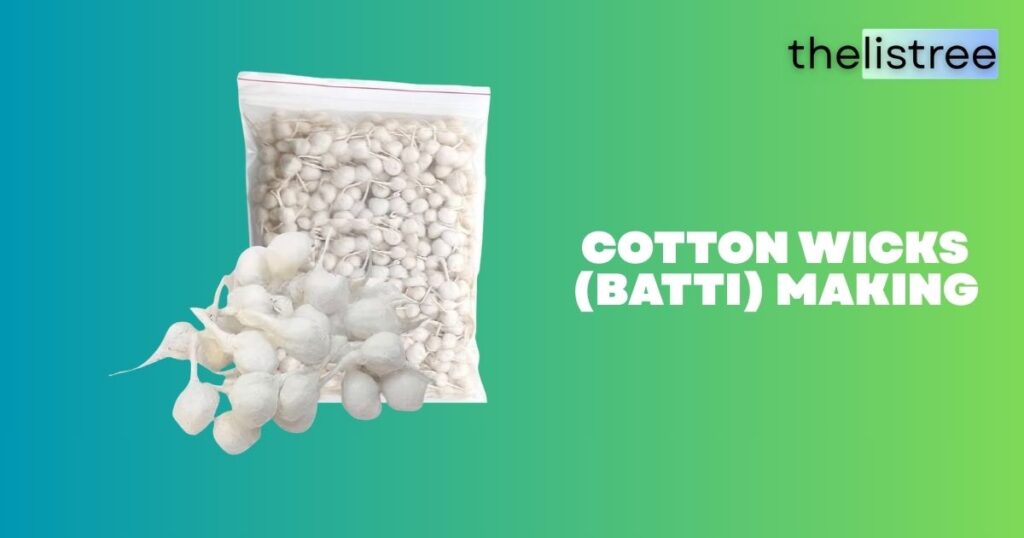
Temples, households, and religious ceremonies use cotton wicks constantly. Demand never drops in India. Plus, it’s super simple to make.
Buy a small cotton wick-making machine (₹15,000-20,000). Raw material is just cotton. For ₹10,000-12,000, you get enough cotton for 2-3 months of production.
Production cost per kg: ₹80-100. Selling price per kg: ₹150-180. Make 150-200 kg monthly with a small machine. That’s ₹10,000-15,000 monthly profit initially.
Supply to local kirana stores, temple trusts, wholesale markets, and puja supply shops. Packaged in 100g and 250g packs with simple branding.
The work is easy. You can run this while doing another job. Women can manage this entirely from home. Scale up with bigger machines and hire 1-2 workers when orders increase.
Investment: ₹30,000-35,000 | Monthly Profit Potential: ₹10,000-25,000
How to Choose the Right Business for You
Don’t just pick randomly. Think about what you enjoy and what you’re good at. Love cooking? Tiffin service or pickle business makes sense. Good at teaching? Online tutoring is perfect.
Check your local market. What’s missing in your area? Too many tea stalls already? Skip that. No good tailors nearby? That’s your opening.
Be honest about time commitment. Tiffin service needs you to wake up early daily. Freelancing is flexible but needs discipline. Photography is weekend-heavy.
Start with what you can manage alone. Don’t hire people immediately. Learn the business yourself first. Mistakes are cheaper when you make them solo.
Essential Tips for Success
Keep initial costs low. Don’t buy fancy stuff at first. A basic setup works fine. Spend money where customers notice: packaging, quality, cleanliness. Focus on quality over quantity initially. 10 super happy customers bring 50 new ones through recommendations. One bad review kills trust.
Use free marketing. WhatsApp groups, local Facebook communities, and Instagram cost nothing. Post regularly. Share behind-the-scenes content. Be genuine. Get necessary licenses. FSSAI for food, GST if turnover crosses ₹20 lakhs (₹40 lakhs from April 2026), and local municipal permissions. Don’t skip this.
Track every rupee. Write down expenses and income daily. Use a simple notebook or Google Sheets. Know your actual profit, not just revenue.
Common Mistakes to Avoid
Don’t spend all ₹50k before starting. Keep ₹10,000 as an emergency buffer for unexpected repairs or slow months.
Don’t undercharge. People equate cheap with low quality. Price fairly for the value you provide.
Don’t wait for perfection. Your first product won’t be perfect. Your first customer interaction will be awkward. That’s fine. Start anyway. Improve as you go.
Don’t ignore customers after they pay. Service after the sale matters more than the sale itself. Reply to messages fast. Fix complaints immediately.
Don’t try to do everything. Pick one business. Get good at it. Make it profitable. Then think about the second business if you want.
Government Support You Can Use
PM Mudra Loans give up to ₹10 lakhs without collateral for micro-enterprises. The Shishu category offers up to ₹50,000 for startups.
Startup India registration gives tax benefits and easier compliance for 3 years. It’s free to register online.
Many states have skill development programs offering free training in tailoring, food processing, beauty, and mobile repair. Check your state’s MSME department website.
FSSAI registration for food businesses is mandatory but straightforward. Small-scale registration (turnover under ₹12 lakhs) costs just ₹100 and can be done online.
Your Next Steps
Pick 2-3 ideas from this list that excite you. Research them more deeply. Talk to people already running similar businesses. Ask honest questions about challenges.
Calculate the exact investment needed. List every single item you’ll buy. Add 20% buffer to your estimate because you always forget something.
Test your idea small before going all-in. Make 10 pickle jars first, not 100. Tutor 3 students first, not 15. Shoot 2 events for friends before taking paid bookings.
Set a deadline. Don’t think about it forever. Give yourself 30 days to decide and take the first step. Rent deposit. Equipment purchase. First raw material order. Something concrete.
Remember: every successful business you see today started exactly like this. Small investment, big dreams, and someone who actually took action instead of just planning. You have ₹50,000. You have internet access. You have ideas. That’s more than enough to start.
Disclaimer: Investment amounts and profit figures are estimates based on 2026 market conditions and average scenarios. Actual results depend on location, effort, skills, and market demand. Do your own research before investing.